Thursday, June 11, 2015

Eating and Speaking in Sevilla

Sevilla is one of the most helpful and forgiving places for speaking beginner Spanish I've ever experienced.  Virtually every person you'll transact business with speaks some English (often a lot of English, as well as other languages), but they gesture as they speak (dos? they ask, holding up two fingers) and seem to be expert interpreters of my intentions rather than my exact expressions.  They will patiently let you make more than one attempt, and only ask you politely in English when necessary, afterwards dropping back into Spanish as if no embarrassing breakdown had occurred at all.  Sometimes they will make sweet, easy-to-interpret jokes with you, as when I asked Do you know where we are? , and a helpful grinning stranger chimed in, Sevilla!   Note that this applies mainly to business people.  My experience with enthusiastic locals has been that they'll grin at you, clearly intending to make a joke, and in the space of 2 seconds mumble what sound like 25 works that may or may not be Spanish, either unaware or unconcerned by the fact that Maria and I have no idea what we're laughing about.

We have encountered exceptions to both these rules, however.  Yesterday at breakfast we were on another search for juevos revueltos for David, and happened across a cafe with a breafast especial that listed juevos fritos (fried eggs).  I said, in my best Spanish:  I would like this breakfast.  It is possible that to have scrambled eggs?  The waitress' brow furrowed, somewhat crossly, and I tried again:  I like scrambled eggs?  A brief pause.  Then, in an exasperated voice, a rapid sequence of words streamed from her mouth, slowing only when she read each word of the menu description, emphasized one. at. a. time. glaring at me over her glasses:  Un.  desayuno.  con.  cafe.  jugo.  de.  naranga.  y.  dos.  juevos.  fritos.  She said the last again:  Juevos.  Fritos.  Then several more angry words, as she took two steps toward the kitchen, ending in an English one, her arms upraised:  Yes?  I said I need more minutes to think at which she forcefully exhaled and walked away (though, to her credit, she seemed less cross when she returned a few minutes later).  It wasn't an unpleasant episode, though; watching her help other tourists helped me appreciate just how patient the business people in Sevilla really are.

Later in the same breakfast, a thin eldery man wearing a pastel blue blouse with a scarf and smart brimmed hat shuffled stiffly but unhurriedly into the restaurant, placing a hand of greeting on those along his path and waving to those further away.  Our same waitress stopped three paces in front of him and a thin smile crept over her lips as they squared off to one another.  Suddenly they both raised their arms in the unmistakable flourish of flamenco dance and then they both laughed, and she helped him sit at the table next to us, as I heard him say in an accented English, beautiful, beautiful.

He asked where we were from, and when we told him, he glanced momentarily ceiling-ward, as if reminiscing.  Ah, Washington, Chicago, New York, San Francisco, beautiful.....beautiful.  I do flamenco in America for many weeks  he said, in the same accented English.  

We switched to Spanish.  Hearing my lingering cough he offered me a delicious grapefruit cough drop, recommended several other restaurants, usually adding beautiful wistfully in English at the end of each sentence.  When we finally saw him off, I stood and shook hands with him.  He turned, took Maria by the hand, and with a quarter turn toward me said with smile forgive me, winked and kissed it.

Sevilla

Our apartment in the central district of Sevilla is down a small alleyway admist a thicket of other alleyways which ricochet off each other at unpredictable angles, converge five or eight at a time in small plazas every few blocks, and which each retain their name for at most two blocks before adopting another.  We love it.

Here is a sampling of street names near us:  Cabeza Del Rey Don Pedro, Virgenes, Santa Angela De La Cruz, Jesus De La Veracruz, Jesus De La Pasion, Amor de Dios.  At times this makes it difficult to remember whether the bakery we liked was on Jesus De La Pasion or Jesus Fuertes (who, incidentally, we found out was not the Jesus we thought).


This was exactly what Maria had been hoping for: streets so narrow you can only walk single-file when a comes past, and every street lined with beautifully ornamented ironwork balconies.  Here are some representative pictures.


When you traverse 10-15 different short blocks to go from anywhere to anywhere else, they can begin to look alike, and after three days here we found ourselves suddenly gripped by uncertainty what turned out to be approximately 10 steps from our doorstep (a fact it took 4 minutes with the map to reveal).

In case you're wondering, the streets and plazas are usually quite crowded, but I don't like to take photos with other people around so these were the few times in the early morning I was able to get some pictures.

Tuesday, June 9, 2015

Day 2: Train to Sevilla

Here, in pictures, is our trip by high speed train from Madrid to Sevilla.  The train, smoothly and quietly, transported us at 155 mph through the countryside.  It was truly a joy to ride.  To the ledger of Ways-The-Spanish-Are-Doing-It-Right, below the desayuno tradicional and the many public book stalls, I now add the high speed rail system.


Day 1: Madrid; art, tapas, bull fighting

A Picasso in the Museo del Reina Sofia
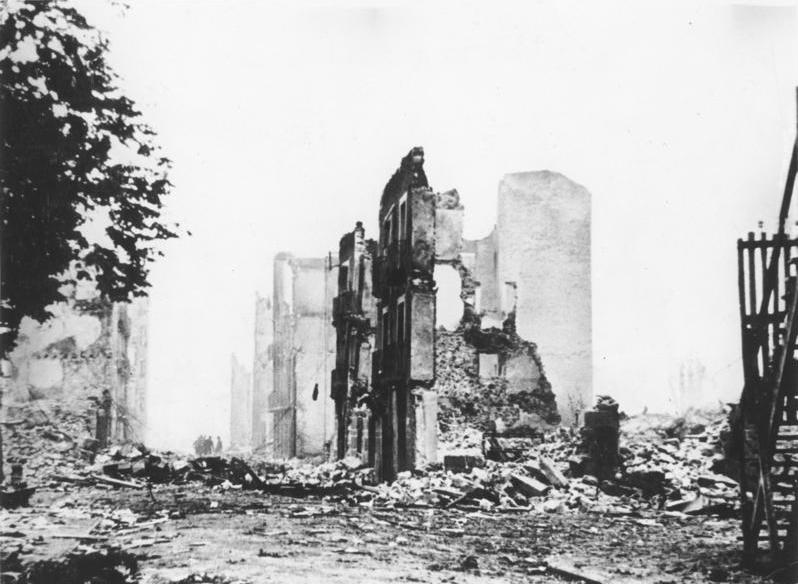
The highlight of the modern art musem was Picasso's Guernica, a mural-sized artwork of the late 30's evoking the terror and chaos of the Spanish civil war.  I was scolded for taking the photo to the right of another of Picasso's sketches from the same time, so the depiction of Guernica below I lifted from google image search.  I've also included an image of the ruins of the city of Guernica after the 1937 bombing which inspired the painting.

The exhibit included photographs of the work in progress, which showed major changes of direction from Picasso's initial full-size sketch and the final painting.  For example, the bull's head in the left-hand corner was connected to a full body (which you can see the outlines of) and the light above the horse was entirely absent, as most of the original work was shown as being outside.

We also saw a book published shortly after the war entitled Salud!  Stories, Poems, and Sketches of Spain by American Authors which you can read the full text of here.
Picasso's Guernica

Guernica after the bombing of 1937


* * *

After the museum and a short siesta (which David considers near-compulsory) we went in search of our first tapas restaurant.  The truely traditional tapas bar is, literally, a bar for drinking.  As you stand and drink with your friends small plates of food are brought for free or for a small price.  

Our first tapas restaurant was selected for the English subtitles on its menu, its reasonable prices and its proximity at the moment we decided we were too hungry to keep walking.

Inside, there were a few people seated at a decorative tile-lined bar watching a televised bull fight and several high tables with stools lining the room's perimeter.  The barman was using a deli meat slicer set on the bar to cut ham for a charcuterie board while joking with the two children of a woman picking up some meat to go.  A young mother helped her baby tentatively traverse the length of the restaurant to the smiling encouragement of some tourists like us at the tables.

We ended up ordering a strange mix of dishes:  several thin, crispy, deep fried shrimp pancakes, a cod salad, and something billed as "grandma's" meat stew sandwich (which was indeed like stew in a sandwich).  Maria had a sangria, the recipe of which she speculated upon for the rest of the night, and I had a very nice glass of red wine (for 2 euros, compared with 1.5 euros for water!).

Of the televised bullfight, coverage alternated between the fight itself, interviews with the bullfighers, and slow-motion replays of banderilleros narrowly escaping being gored, or, in one case, not.  During the few minutes we watched, three men with capes edged repeatedly closer to the bull who was breathing heavily, head lowered, festooned lances dangling limply from barbs embedded in its shoulder.  A tight shot revealed the bull's entire shoulder and side to be slick with blood.  One of the men managed to provoke it into a short series of weak lunges before it returned to seeming too confused or possibly exhausted for continued effort.

Maria later commented that the fight used the animal's natural instincts against it for others' entertainment—not unlike American reality television (though with fatal consequences to an unwilling participant, in the case of the fight).  The role of the men we saw (the banderillas) is to stab the bull while running as close to it as possible to demonstrate bravery.  From my admittedly short viewing, they seemed no more brave or admirable than bullies.

Day 1: Madrid; breakfast & the Parque del Retiro

For several weeks, Maria has been excited about Spain's desayuno tradicional (traditional breakfast), which consists of churros served with a mug of thick chocolate for dipping.  Traditional though it may be, David feared this insufficient to sustain him until lunch (which is served between 1 and 3), and so, at 8 am, we set out to find one desayuno tradicional for Maria and one desayuno Ingles (English breakfast) for David.  Completely empty so early on a Sunday morning, we found a small cafe down a side-street near our hotel which satisfied both of our first-morning breakfast requirements.

Desayuno Tradicional


View from outside our breakfast cafe
The area of Madrid we're staying in feels like the Miraflores district of Lima, or a bit like a Spanish version of San Francisco's financial district.  Sort of.  Everything is very clean and modern and has an up-scale, business-like feel.  A Spanish flavor of modern cosmopolitan city.

Across a large street from our hotel is the Parque del Retiro, a gigantic park where we spent the next few hours walking.  By this time, everyone seemed to be out enjoying their Sunday.  We saw joggers (both the everday sort and groups wearing team spandex), dog walkers, families rollerblading, and several public exercise classes with a mix of participants squatting and waving their arms in what would have looked like a dance if it had been a bit faster.

In the center of the park is a large body of water on which we saw people rowing boats and a club crew team practicing sculling.  Somewhere on the far side we could hear a saxaphone haphazardly improvising around what was unmistakably the chicken dance.  Further into the park, we saw the early preparations for a huge outdoor book faire with at least 30 stalls lining both sides of a broad walkway.

* * *

David's belief is that, short of putting yourself in danger or the danger of becoming irrevocably lost, navigation should be done by instinct, and that there's nothing like a good ramble about a city to catch the general feel.  So in that spirit, we set out in what we were pretty sure was the direction of the Museo Reina Sofia, a modern art museum we wanted to visit.  After no more than 30 minutes of catching the general feel, we appealed to a map, set out back toward the park again, and, upon reaching it, reembarked in the correct direction.

On our ramble we did encounter a Museo, however.


Day 0: Planes

Maria, who is much better at identifying the larger-scale patterns in my life than I, observed that this always happens.  I get sick at the start of every break.  So it was that the senior Dobies caravaned the younger (David, moaning and snuffling, Maria keeping us organized and together) to the San Francisco airport at 8am yesterday.

We had an Air Canada flight to Toronoto, followed by another landing in Madrid almost exactly 24 hour after leaving SFO.  Weeks ago I proposed to Maria that we start taking Melatonin pills and moving our sleep schedule back 30 minutes a day until we were perfectly synced to Spain's time zone.  She sensibly pointed out that we were both still working, and so the de facto new plan had become to try and sleep the full 17 hours to both shift time zones and become miraculously well in one fell stroke.  Maria's plan was to try and sleep at all, since she allegedly doesn't sleep on planes. 

Our plane—or, more specifically, its ceiling—was vaguely reminiscent of Superman's ice cave in the original film.  It shone a cold, bright blue illuminated as if from a light source far behind a thick translucent slab (though upon later inspection it seemed to be scattering upward facing lights running the length of the aisles).  At various times during our flight this uncanny ceiling was strongly pink, or dark red, or glowingly richly golden.
Superman's ice cave

Ceiling of our airplane

The full length of the glorious cabin

Our first impression of the Toronto airport was the strikingly poor planning of putting all restrooms at the end of a 10-minute long corridor, which is only accessible by first walking 10 minute in the opposite direction to go through customs.  Once we had traversed that minor crises, I quite enjoyed a huge iron sculpture sculpture which I could have sworn was 'Tilted Arc' by Richard Serra.


(The Internet confirms it's Serra, but a different piece entitled 'Tilted Sphere').  We also ate an interesting Indian meal whose i-pad ordering system promised us "full control" over our experience; something I thought Dad would have appreciated.  Sadly, the vindaloo (which the waiter had proudly described as 'like nothing you have ever had before') had an almost overpowering quantity of tamarind and clove.

The populace of our first leg had struck me as very French.  Young, rail-thin fathers wearing sweat-pants still somehow came off as fashionable and urbane.  A baby on the flight screaming 'no' with that rounded 'oh' vowel-sound was echoed by sweet French cooing from all directions.  The general feeling was friendly, but also restrained.  By contrast, the crowd on the second leg to Madrid had an immediate convivial "hail fellow well met" attitude.  Carpeted by a dozen Spanish conversations and much laughter, I felt as if groups of old friends were reuniting in an ale house.

I slept entirely through the hot meal, and after switching seats with Maria, confirmed (between my own cat naps) that Maria was sleeping as well.  Mission successful!  Our first test upon landing would be to see whether we could successfully use the metro and navigate on foot to our hotel.